Live.Muse
A multimodal generative audiovisual performance framework. A monome grid plays generative visuals in Processing, Sonic Pi sends the music on to Ableton Live, and two language model assistants write code on request to change the visuals and the music while the set runs. Begun in Berlin in 2024, it became an installation in Barcelona in December 2025.
Can performers invent their own gestures on the fly? Live.Muse lets a language model write the code that maps a controller to image and sound in the middle of a performance, while the music stays the artist's own compositions.



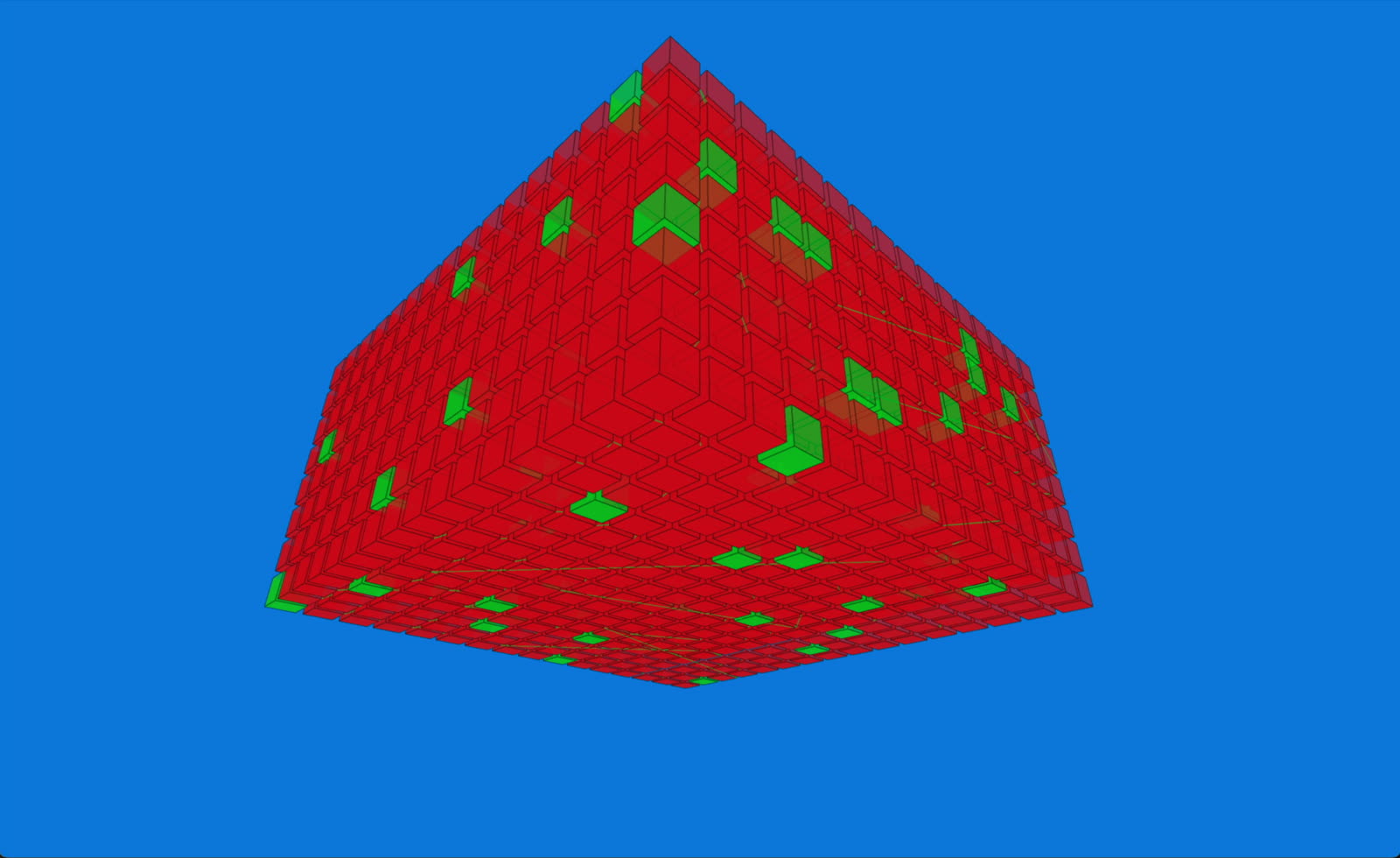
01 · Demo
See it running
Spatial audio mix
The full installation again, with its spatial audio mix.
Project diary
How the piece was made, from the studio to the installation.
02 · At a glance
- Role
- Artist and developer, from the concept and compositions to the code and visuals
- Timeframe
- August 2024 to December 2025
- Audience
- Audiovisual performers, live coders and installation visitors, and researchers in generative music and interactive media.
- Collaborators
- Solo
- Stack
-
- Processing and p5.js
- Sonic Pi and Strudel
- Ableton Live
- monome grid
- OSC and MIDI
- Language model assistants for code
Audiovisual sets usually fix their mappings before the show: a key does what it was patched to do. Live.Muse wants affordances that can change mid performance, written as code in answer to a prompt, without giving up the quality of finished compositions. Its visual language follows experimental filmmakers such as Takashi Ito, Stan Brakhage and Len Lye, and early computer animators such as John Whitney.
Constraints that shaped it
- Stacks that already hold up on stage: Processing and p5.js for visuals, Sonic Pi and Strudel for live code, Ableton Live for the multitrack mix
- A monome grid as the one physical controller
- Generated code changes the visuals and the MIDI, never the audio engine directly
- Finished compositions carry the sound, so generation shapes the set rather than replacing the music
- One framework for three uses, performance, installation and composition
03 · Outcomes
What changed
- First experiments during a three month artist residency at Petersburg Art Space, Berlin, August to November 2024
- Formally conceived and presented at the Universitat Pompeu Fabra Generative Music workshop, led by Valerio Velardo and Xavier Serra, Barcelona, December 2024
- Presented at Innovation Lab, Utrecht (June 2025), at the Mutacions Festival, Terrassa (September 2025) and at dorkbot London (November 2025)
- An installation build in Barcelona in December 2025, funded by a Mutacions artistic production grant, documented as a full audiovisual album in 4K and a spatial audio mix
- Its stem library and code became the starting point for Windchime, shown at Gray Area and published at NeurIPS 2026
04 · Residency, workshop, festival
Berlin, then Barcelona
Petersburg Art Space · Artist residency
Berlin, Germany · August to November 2024
Three months developing audiovisual work and exhibiting alongside an international cohort of artists. The first Live.Muse experiments began here.
PAS is a nonprofit art space, venue and residency in Moabit, Berlin, for experimental art and music.
Universitat Pompeu Fabra · Generative Music workshop
Barcelona, Spain · December 2024
Live.Muse was formally conceived and presented at the workshop led by Valerio Velardo and Xavier Serra.
UPF's Music Technology Group is one of the leading research groups in sound and music computing.
Mutacions Festival · Talk
ESEIAAT, UPC, Terrassa, Barcelona · September 24, 2025
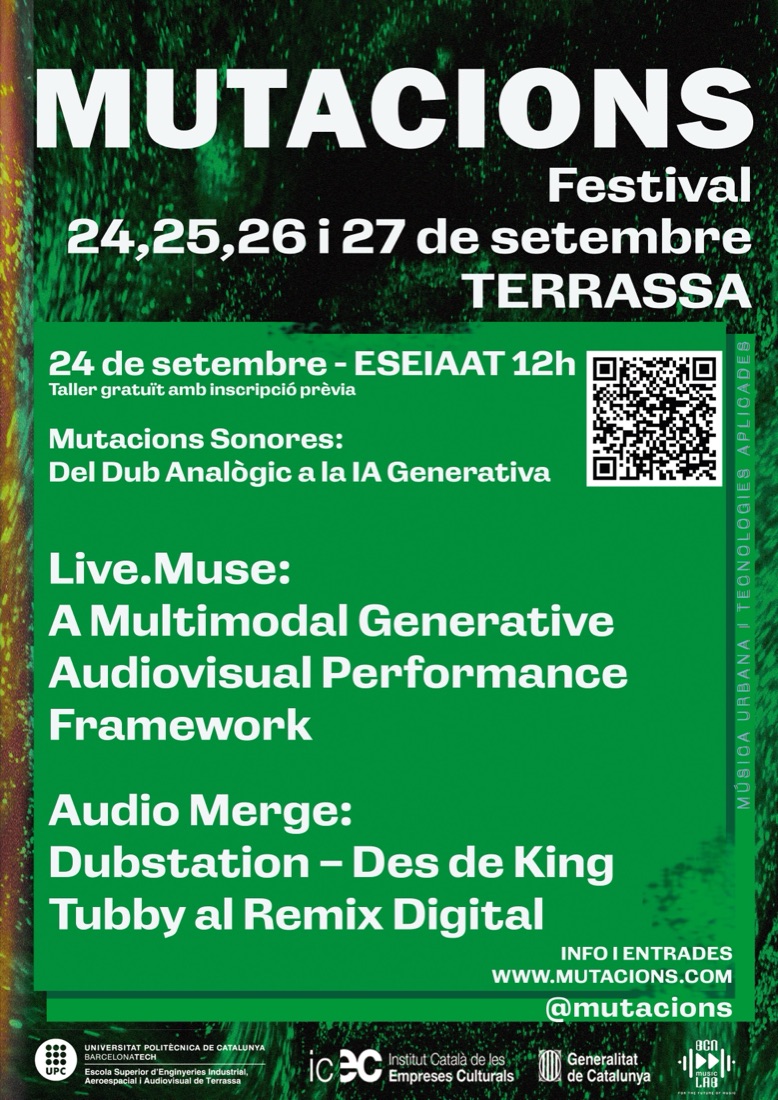
"Live.Muse: A Multimodal Generative Audiovisual Performance Framework", in Mutacions Sonores, a free session at ESEIAAT on the opening day of the festival.
Mutacions is a festival of urban music and applied technologies in Terrassa, with UPC and the support of ICEC and the Generalitat de Catalunya.
Live.Muse · Installation
Barcelona, Spain · December 2025
The framework built as an installation, funded by a Mutacions artistic production grant: generative visuals, hardware control and live coded music with original compositions.
05 · The album
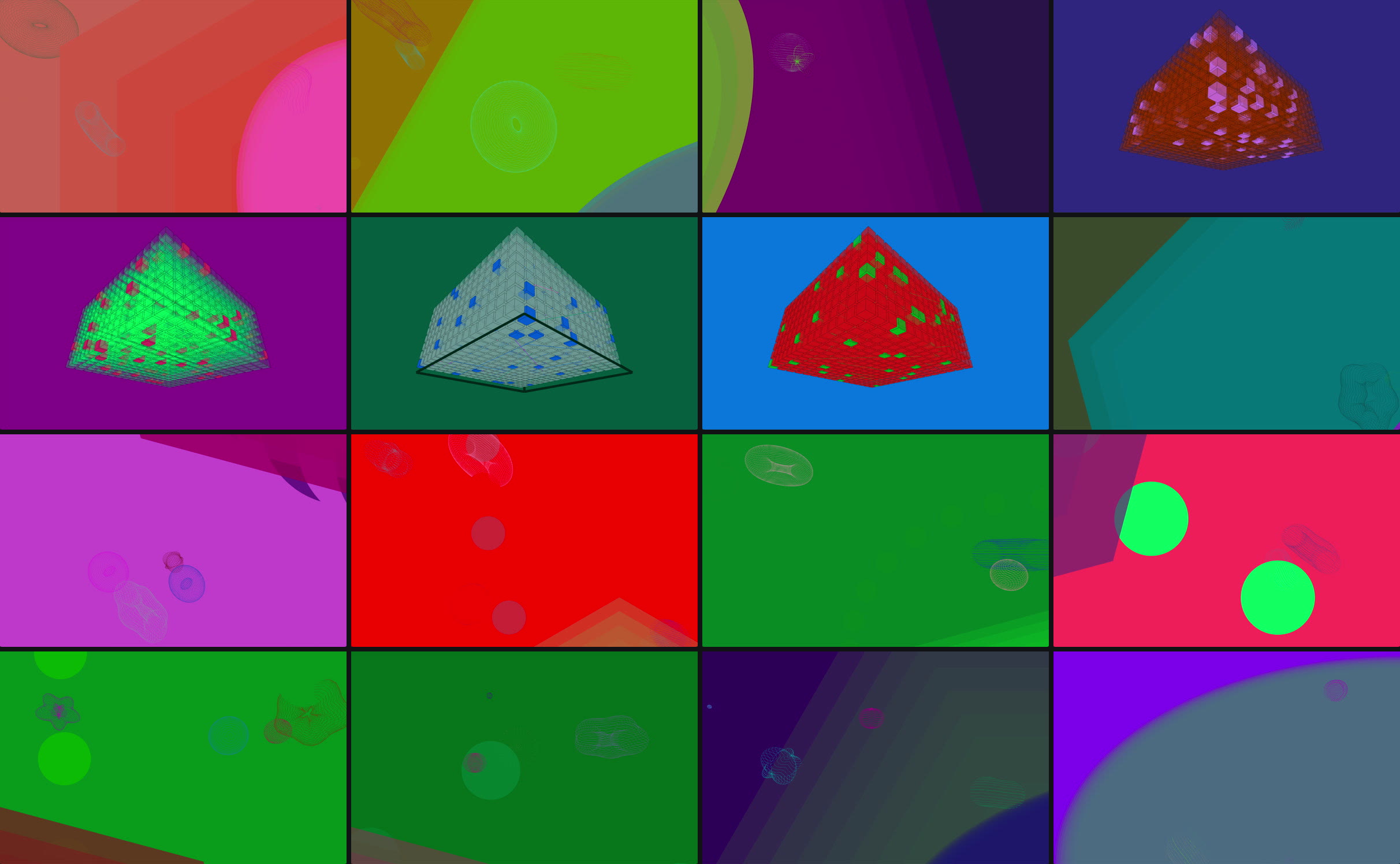
Sixteen scenes, one a minute
06 · Architecture
How it fits together
07 · Research to production
From a residency to an installation
- 1 Experiment Berlin residency Petersburg Art Space, 2024
- 2 Concept UPF workshop generative music, December 2024
- 3 Present Innovation Lab Utrecht, June 2025
- 4 Present Mutacions talk Terrassa, September 2025
- 5 Present dorkbot London November 2025
- 6 Build Installation Barcelona, December 2025
- 7 Evolve Windchime Gray Area and NeurIPS 2026
08 · The hardware
Tactile control, mirrored on screen
Digital twin: grid 128 (16×8, varibright) + arc 2 · ♪ LISTEN
grid ● hardware: 16×8 (128) · 2 quads · varibright 0–15 · tilt ✓ arc ● hardware: 2 enc × 64 LED (varibright) · push per enc
09 · Visual stems
Scenes from the installation
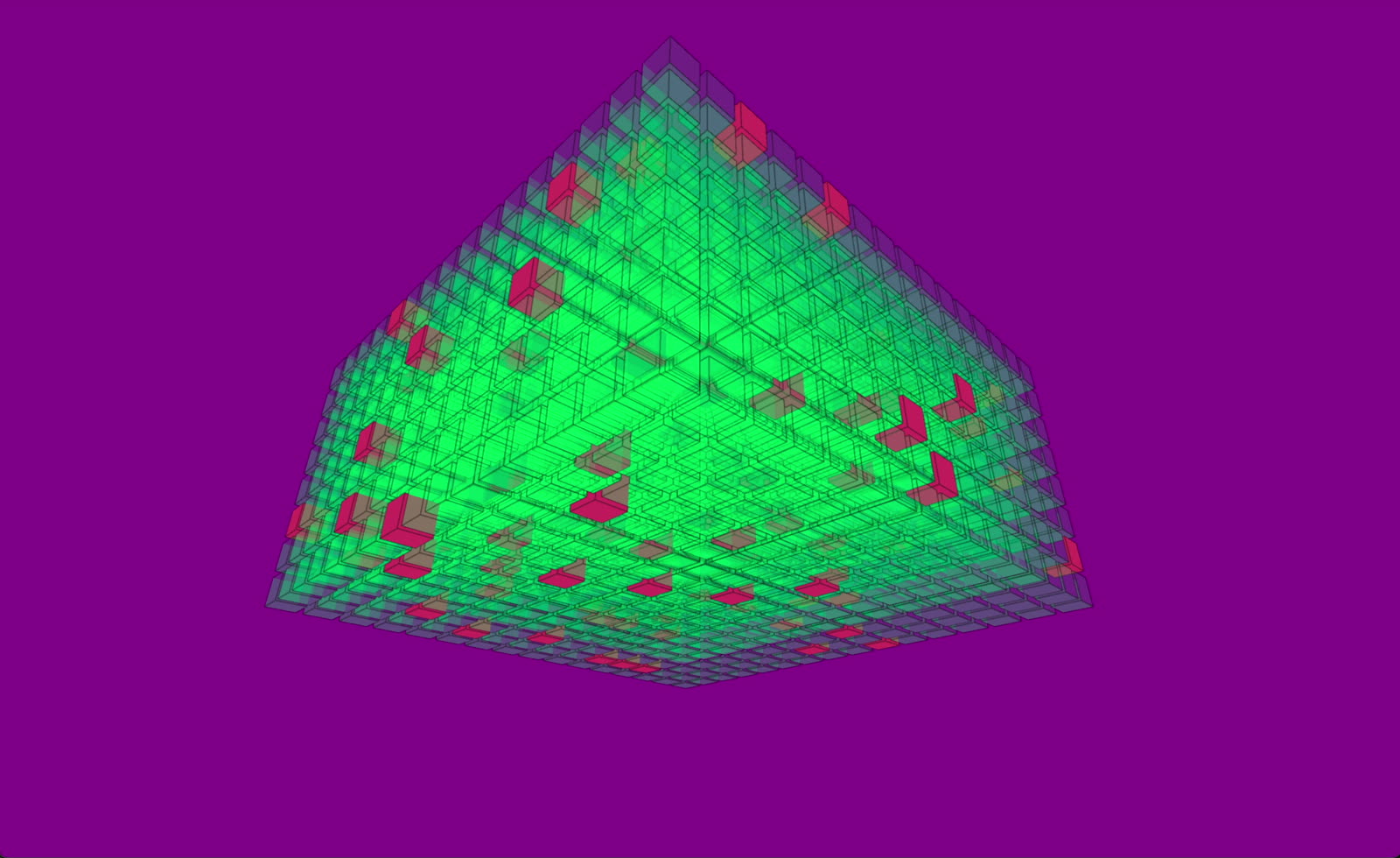
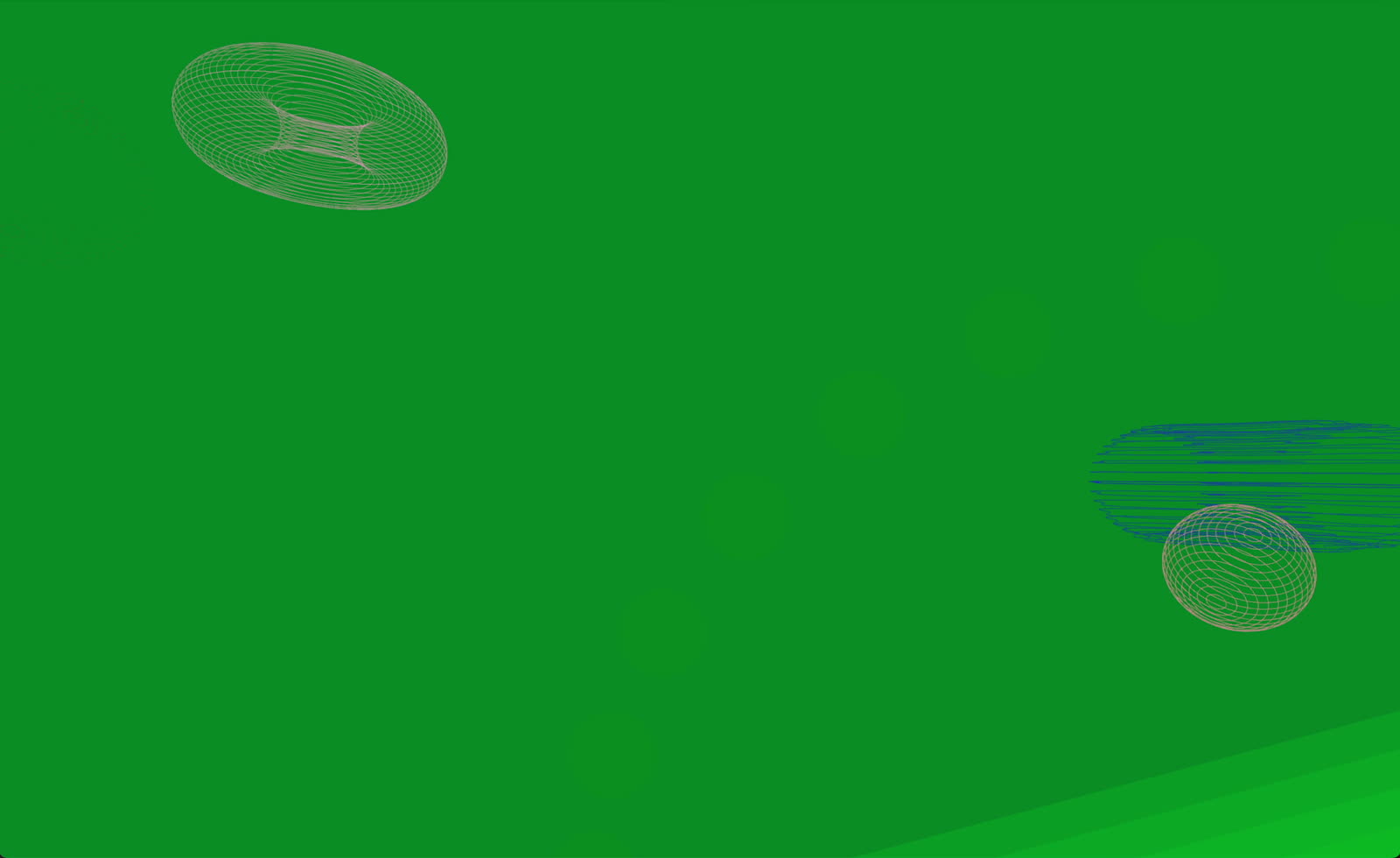
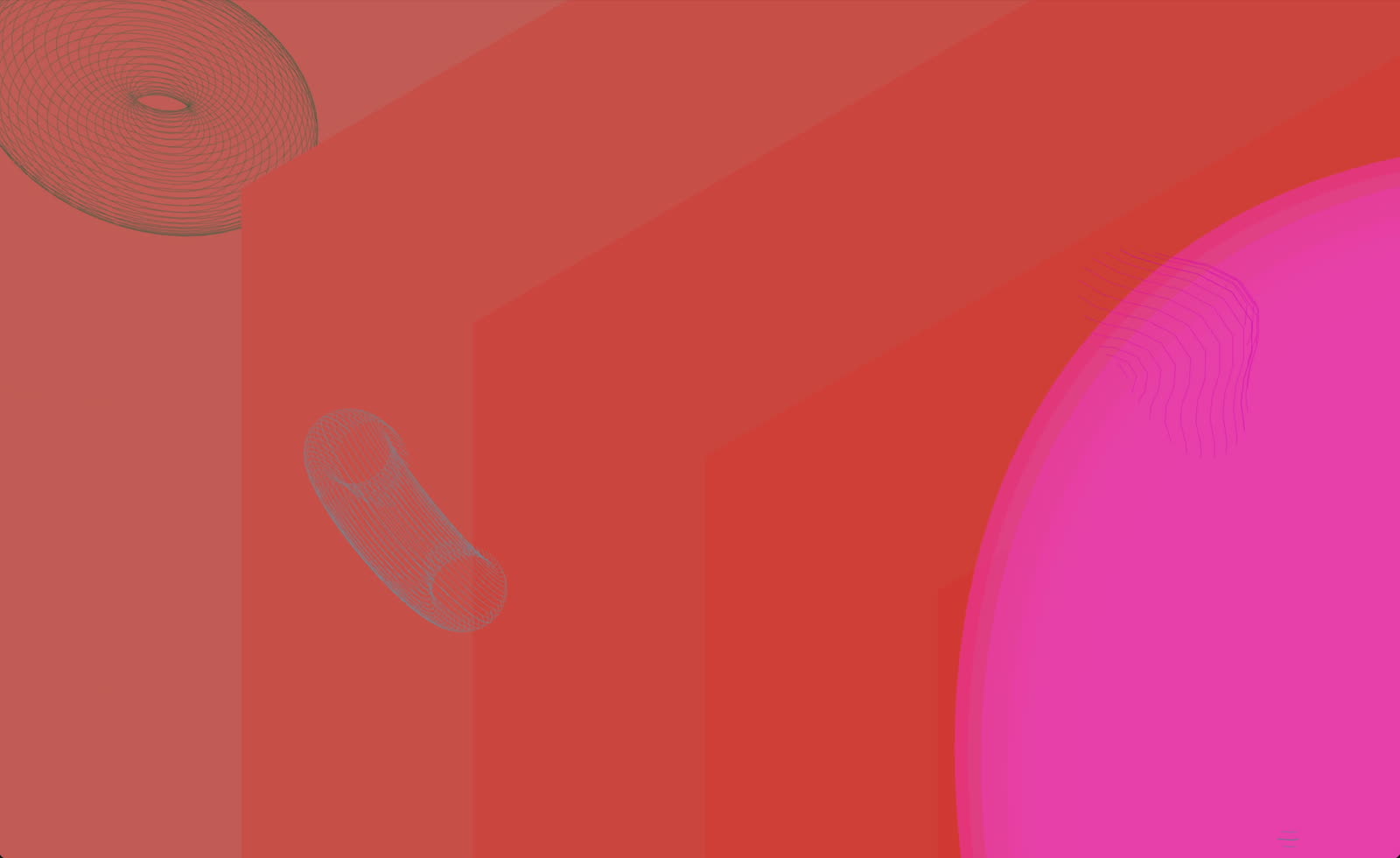
Full screen scenes that layer and trigger like the parts of a track.
10 · The storyHow it came together
Why a framework
Live.Muse started as a question about gesture. A controller in a live set usually does one thing, decided in rehearsal. Here the performer can ask for a new behavior in words, and an assistant answers with code: one rewrites the visuals, another rewrites the MIDI. The same framework can run a performance, an installation or a composition session.
Berlin, then Barcelona
The first experiments came out of a residency at Petersburg Art Space in Berlin in the autumn of 2024. That December, Live.Muse was formally conceived and presented at the Generative Music workshop at Universitat Pompeu Fabra in Barcelona, led by Valerio Velardo and Xavier Serra.
How it plays
The monome grid sends control input to Processing, which draws the visuals and sends OSC events on to Sonic Pi. Sonic Pi synthesizes and sends MIDI to Ableton Live, which holds the multitrack audio. The visuals are built as visual stems, full screen scenes that can be layered and triggered like parts of a track, and the music fuses live code with original compositions and audio assets from the artist’s own library.
On stage and in the gallery
Through 2025 the framework was iterated for academic and performance settings: a presentation at Innovation Lab in Utrecht in June, a talk at the Mutacions Festival in Terrassa in September, and a talk at dorkbot London in November. In December 2025 it was built as an installation in Barcelona, funded by a Mutacions artistic production grant, and documented as a full audiovisual album in 4K, with a separate spatial audio mix.
What came next
Windchime grew out of this work, adapting parts of the Live.Muse stem library and code. The two are separate works: Windchime replaces the assistants with retrieval over audio language model embeddings and runs unattended, for visitors who speak rather than perform.
11 · RoadmapNow, next, later
Residency at Petersburg Art Space, Berlin
First experiments in audiovisual work during a three month artist residency, exhibiting alongside an international cohort.
Presented at the UPF Generative Music workshop
Live.Muse formally conceived and presented at Universitat Pompeu Fabra in Barcelona, in the workshop led by Valerio Velardo and Xavier Serra.
Presented at Innovation Lab, Utrecht
The framework presented in the in:sight and in:orbit programme on emerging creative technologies.
Talk at the Mutacions Festival, Terrassa
"Live.Muse: A Multimodal Generative Audiovisual Performance Framework", in a free session at ESEIAAT (UPC) on the festival's opening day.
Talk at dorkbot London
A public talk on the audiovisual process and the system: generative visuals, hardware control and live coded music with original compositions.
Installation in Barcelona
The framework built as an installation, funded by a Mutacions artistic production grant, and released as a full audiovisual album in 4K with a spatial audio mix.
Grew into Windchime
Parts of the stem library and code carried into Windchime, a separate work shown at Gray Area and published at NeurIPS 2026.
12 · TimelineWhat happened, in order
- Milestone Grew into Windchime
-
Release The Live.Muse installation, as a full audiovisual album
The installation built in Barcelona in December 2025, released as a 15 minute audiovisual album in 4K, with a spatial audio mix and a project diary.
Customer value. The whole piece, watchable anywhere: generative visual stems and original music, as the installation played them.
- Full screen visual stems, from wireframe cubes to color fields
- Original compositions, arranged as stems for the installation
- A spatial audio mix of the full installation
- A project diary with behind the scenes footage
Risks
- The language model assistants are a performance tool; the album documents the installation, not a live set
- Milestone Installation in Barcelona
- Milestone Talk at dorkbot London
- Milestone Talk at the Mutacions Festival, Terrassa
- Milestone Presented at Innovation Lab, Utrecht
13 · DecisionsDecision records
Accepted Let the models write code, and keep the music the artist's own
Context. Live.Muse wants a performer to change mappings and behaviors mid set by asking for them, without the output falling below the quality of finished compositions.
Decision. Two assistants answer prompts with code: one updates the Processing visuals, the other the Sonic Pi MIDI sent to Ableton Live. The sound comes from original compositions and the artist's audio assets.
Why. Code is inspectable and runs in the same live coding stack the performer already plays, so a bad answer can be undone, and the compositions keep the output quality high.
Consequences. The framework moves easily between performance, installation and composition. Windchime later kept the principle, a model in the loop fenced by structure, and swapped generation for retrieval.
14 · KeywordsTopics, methods and venues
- generative audiovisual performance
- multimodal
- live coding
- Processing
- p5.js
- Sonic Pi
- Strudel
- Ableton Live
- monome
- language models
- code generation
- visual stems
- installation
- spatial audio
- Petersburg Art Space
- Universitat Pompeu Fabra
- Mutacions
- Barcelona