What I'm building right now.

Practice based, state of the art audio ML research, multimodal installations and audio plugins.

Trent Eriksen

Audio ML, audiovisual installations, practice based research.

Published at top conferences: NeurIPS 2026 (coauthored with Stanford's CCRMA), ISMIR 2026 and ISMIR 2025.

Voice conditioned audiovisual installation

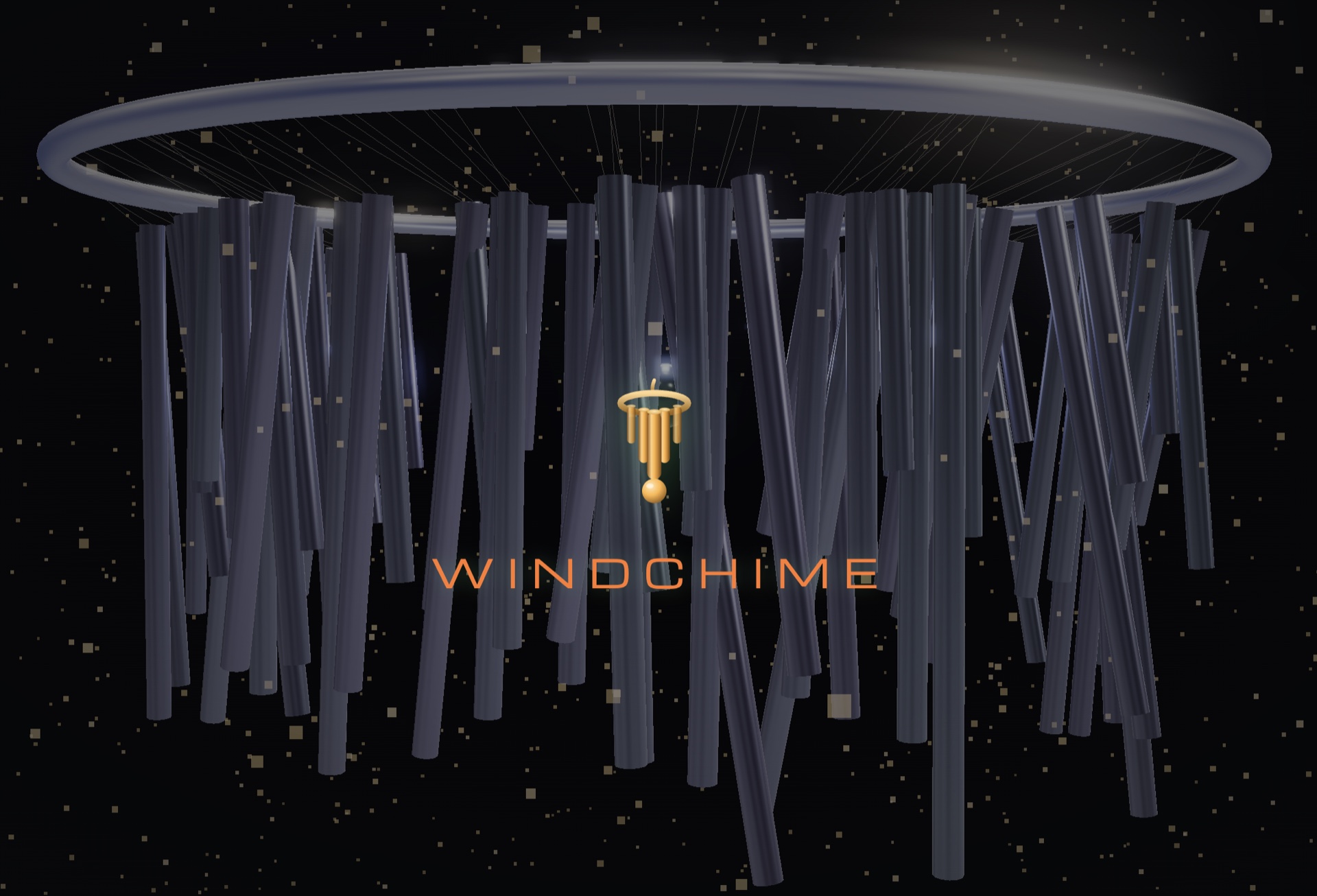
Windchime

Gray Area NeurIPS CCRMA, Center for Computer Research in Music and Acoustics Stanford University
Details

Shown at Gray Area, San Francisco; published at NeurIPS 2026 Creative AI, Sydney, coauthored with Stanford CCRMA Paper coauthored with Celeste Betancur of CCRMA, Stanford University's Center for Computer Research in Music and Acoustics, a leading center for computer music since 1975.

Languages PythonTypeScriptJavaScriptp5.jsThree.jsStrudel (pattern DSL)HTML/CSSShell
Core skills Audio language models (CLAP, CLaMP 3) Speech recognition (faster-whisper) Vector retrieval (FAISS) Live coded audio (Strudel) Generative visuals (p5.js, Three.js) Hardware control (monome) Offline, unattended deployment
May 2026 to present
Explore →
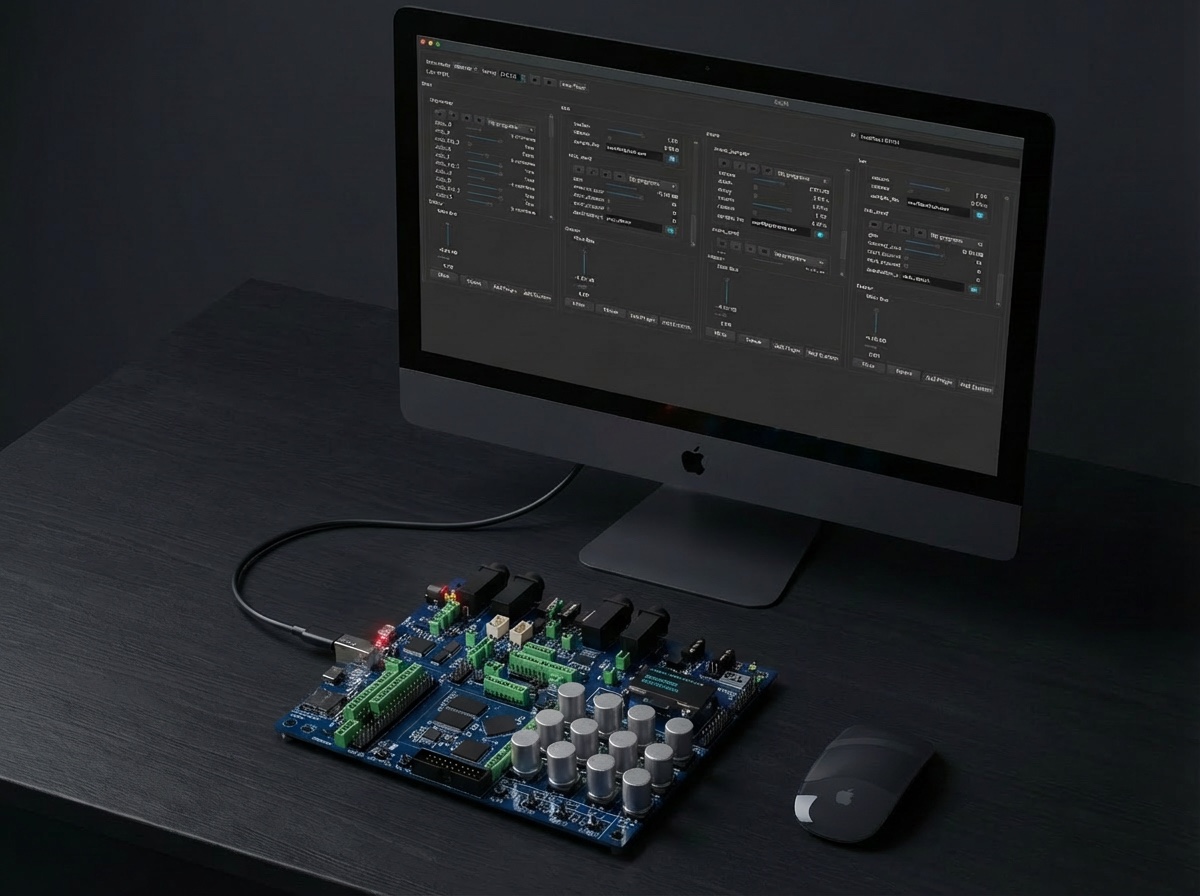
Neural audio instruments for a screenless pedal

HRNSXTN x RDMSXN

MUTEK, international festival of digital creativity and electronic music Elk Audio Roland Future Design Lab Music Hackspace ISMIR 2026, Abu Dhabi ISMIR, International Society for Music Information Retrieval
Details

Music Hackspace × MUTEK hackathon: 1st, Elk Audio Challenge; 2nd, Roland Future Design Lab; presented at MUTEK Forum, Montréal 2026; published at ISMIR 2026, Late-Breaking Demo, Abu Dhabi

Languages C++PythonTypeScriptShell
Core skills Knowledge distillation Neural audio codecs (music2latent) Embedded realtime C++ (JUCE) On device inference (RTNeural) ARM NEON int8 search Cross compilation (Docker, 32 bit ARM) Granular synthesis Evaluation design
August 2026 to present
Explore →
Live audiovisual assistant for Ableton

Lichtspiel

AIMS 2026, Berklee AI Music Summit Music Hackspace Berklee College of Music
Details

Built at the AIMS 2026 hackathon, Music Hackspace × Berklee AI Music Summit, Boston, June 2026

Languages TypeScriptJavaScriptp5.jsPythonMax (Max for Live patching)HTML/CSS
Core skills Ableton Live integration (Max for Live) Realtime WebSocket bridge (Node) Generative visuals (p5.js) LLM authoring behind validation gates Audio analysis (CLAP, librosa) Hardware control (monome)
May to June 2026
Explore →
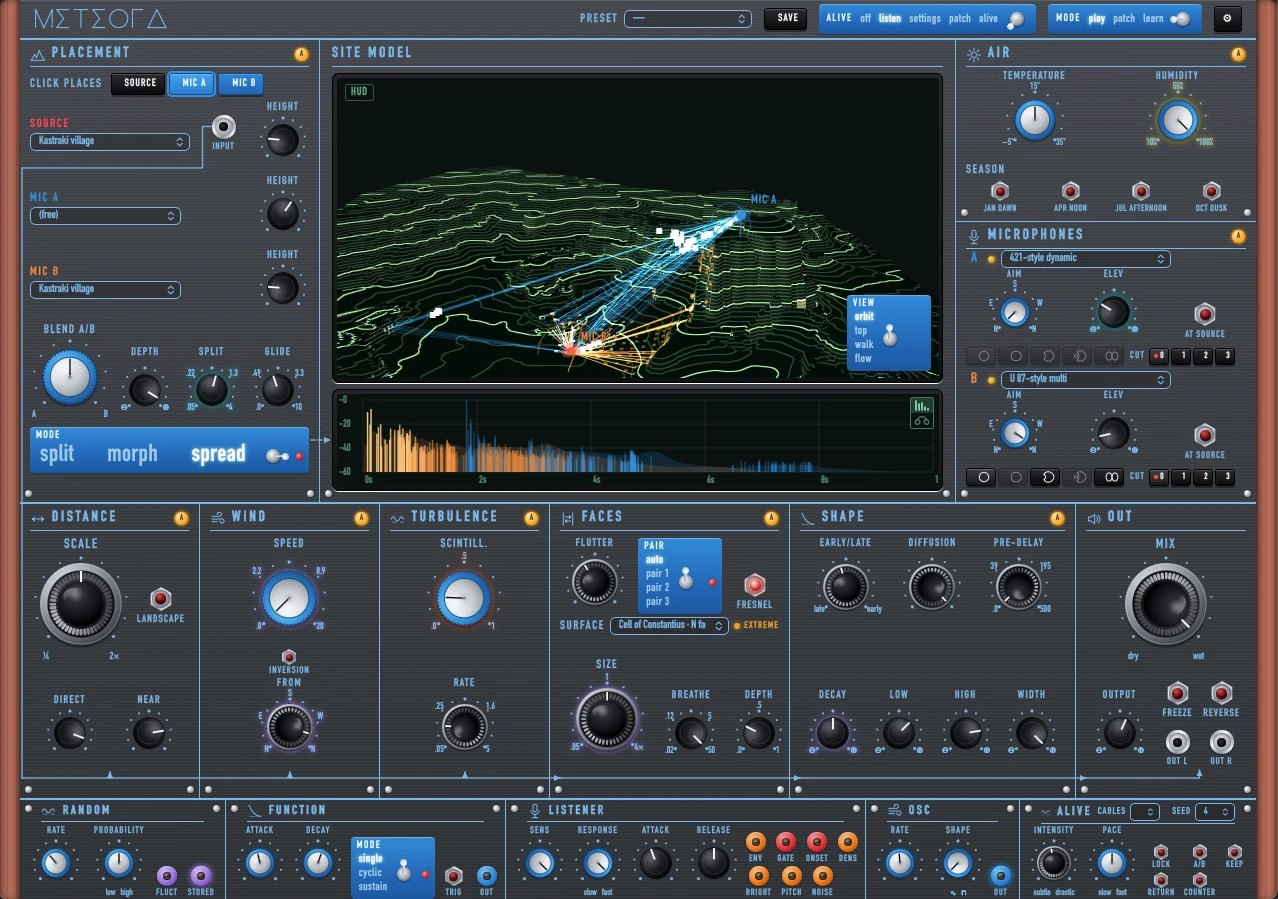
Reverb plugin computed from a real landscape

Meteora

audio.dev Conference, ADC 2026, Bristol and online tiat, the intersection of art & technology era
Details

Released for ADC 2026, the Audio Developer Conference, Bristol, November 2026; public premiere at new interfaces 008, tiat, San Francisco, November 15, 2026, part of Every Thing Computer, supported by Era

Languages C++TypeScriptPythonCMakeShell
Core skills Geometric room acoustics Realtime DSP (JUCE) Convolution and partitioned tails Geospatial data (DEM, OpenStreetMap) Audio feature extraction WebView plugin interfaces Plugin validation and release
October 2026 to present
Explore →
Generative audiovisual performance framework

Live.Muse

PAS, Petersburg Art Space, Berlin Universitat Pompeu Fabra, Barcelona Mutacions
Details

Begun in residency at Petersburg Art Space, Berlin, 2024; presented at the UPF Generative Music workshop, Barcelona, December 2024; a talk at Mutacions, Terrassa, September 2025; an installation in Barcelona, December 2025

Languages Processing (Java)JavaScriptSonic Pi (Ruby)
Core skills Generative visuals Live coding Code generation with language models OSC and MIDI routing Hardware control (monome) Composition and production Spatial audio mixing Installation design
August 2024 to December 2025
Explore →
Transfer learning for drum audio style classification

Probing the World for Groove

ISMIR 2025, Daejeon KAIST ISMIR, International Society for Music Information Retrieval Universiteit Leiden LIACS, Leiden Institute of Advanced Computer Science Kunstinstituut Melly
Details

Published at ISMIR 2025, Late-Breaking Demo, KAIST, Daejeon; MSc thesis, LIACS, Leiden University, defended at Kunstinstituut Melly, Rotterdam

Languages Python
Core skills PyTorch PyTorch Lightning CUDA Cloud GPU training (A100, L4) Transformer modification (PaSST heads) CNN architecture design Transfer learning Audio augmentation
Thesis June 2025; ISMIR September 2025
Explore →

How they relate

Shared lineage, different problems.

Windchime grew out of Live.Muse; Lichtspiel started from Windchime's visual runtime; HRNSXTN carries the same discipline onto embedded hardware; Meteora brings it into a DAW plugin, with open terrain data in place of a corpus.

Compare them side by side 6 dimensions
Windchime HRNSXTN x RDMSXN Lichtspiel Meteora
Type Voice driven installation, runs unattended. Neural instruments on an embedded pedal. Live instrument, played on stage. Reverb plugin, played inside a DAW.
Origin Built on Live.Muse; Gray Area, SF; NeurIPS 2026. Two podiums at MUTEK, Montréal; ISMIR 2026. AIMS 2026 hackathon at Berklee, Boston. Open data of Meteora, Greece; ADC 2026.
AI approach Retrieval. Reflects recorded sound back. Distillation: big model offline, tiny live. Generation. Authors new visual scenes. No model: audio descriptors drive a guide.
AI at runtime In the loop, guarded, with failover. 10 Hz worker, never the audio thread. Authoring only, off the render path. Light descriptors, zero latency, no heap use.
Coupling Standalone: a browser and a monome. Elk Stomp, under its own engine. Inside Ableton Live and Max for Live. VST3 in any host, or Standalone.
Success looks like A full exhibition day, no crashes. A pedal set, no laptop on stage. A clean three to four minute set. Every cliff answers on time, no clicks.

◈ What Lichtspiel inherits

  • Windchime's p5.js instance mode host loop and render pipeline.
  • The serialosc monome bridge and LED event protocol.
  • Musical meaning mapped to output, not just amplitude.
  • All three fence the model behind validation.
  • All three keep the same decision, release and incident records.