
Meteora
A reverb whose space is a real landscape: the rock pillars and monasteries of Meteora, Greece, computed from open elevation and map data. Two microphones move through the valley, every cliff answers at its real distance, and version 0.3 listens to the player and can answer back. Free for macOS, released for ADC 2026.
Can a reverb's space be a place you move through rather than a room you pick? Meteora computes every echo from open terrain data, so distance, direction and air are physical, and it says so whenever it leaves the physics.



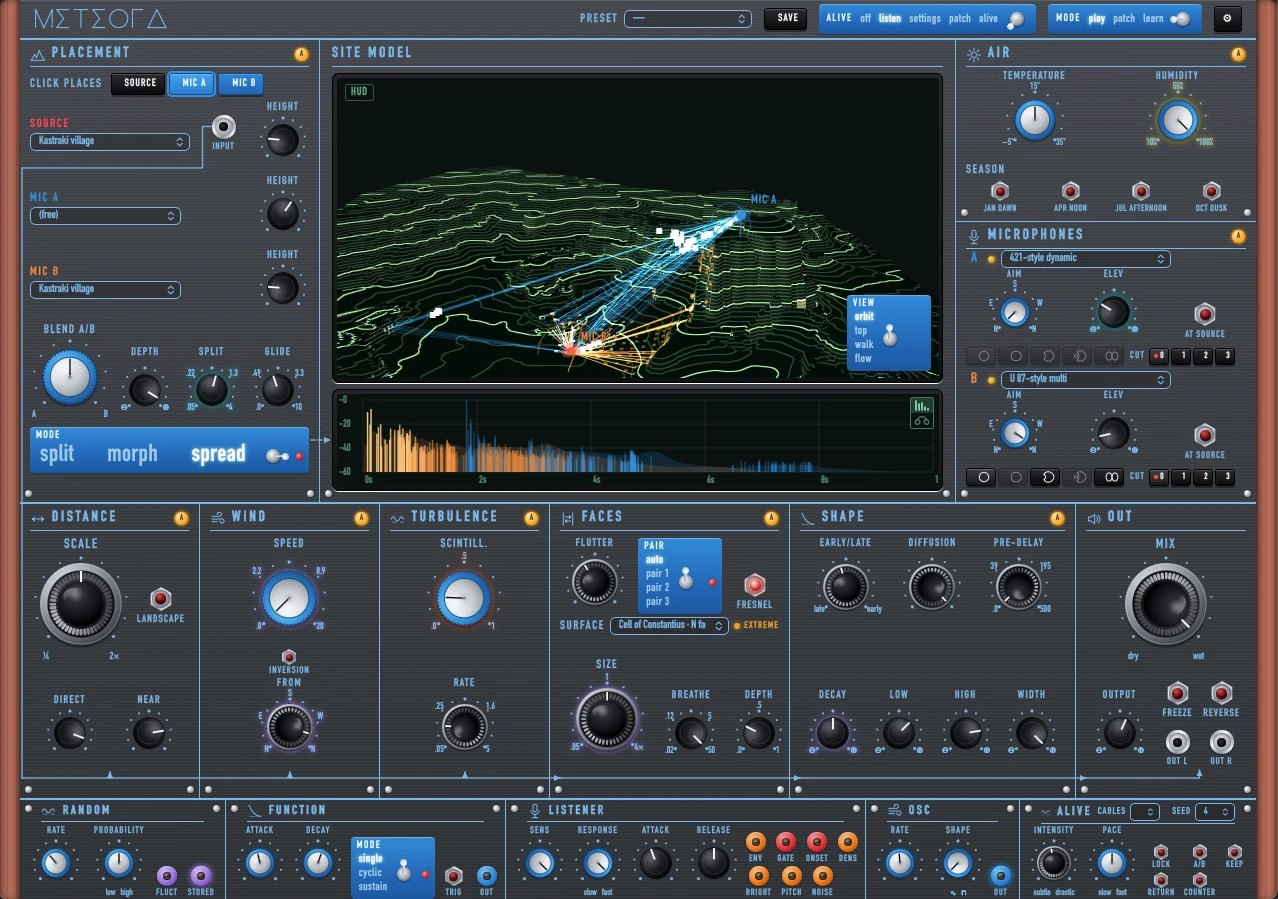
01 · Demo
See it running
Artistic preview
Meteora 0.3, edited with photographs by the author.
02 · At a glance
- Role
- Solo, from the acoustic model to the plugin and its interface
- Timeframe
- October 2026 to present
- Audience
- Guitarists, producers and sound designers who want space as an instrument, and audio developers curious about geometric acoustics inside a realtime plugin.
- Collaborators
- Solo
- Stack
-
- C++ / JUCE 9
- VST3 and Standalone
- WebView interface (TypeScript, three.js)
- Python acoustics pipeline
- Embree ray tracing
- Copernicus DEM GLO-30
- OpenStreetMap
Reverbs model rooms or hardware units. A landscape behaves differently: a cliff 300 m away answers after about 1.75 s, from its own direction, through air that changes with the weather. No survey or recording of the site exists, so the model has to come from open data (30 m satellite elevation and OpenStreetMap) and stay honest about what is estimated.
Constraints that shaped it
- Open data only: Copernicus 30 m elevation and OpenStreetMap; no fieldwork and no measured impulse responses
- Zero latency and no heap use on the audio thread; the landscape is traced again on a worker whenever a microphone moves
- A UNESCO World Heritage Site and a living monastic community: released free, framed as a simulation, not affiliated with the monasteries
- No budget for signing: the build is signed ad hoc and not notarized, so installing it takes one Terminal line
- Each version installs as its own plugin, so a saved session never changes its sound
03 · Outcomes
What changed
- Released free for macOS on Apple Silicon (VST3 and Standalone) for ADC 2026, Bristol
- Echoes from about 57,000 surface patches of a 5 m terrain model, with air absorption after ISO 9613-1 for temperature, humidity and wind
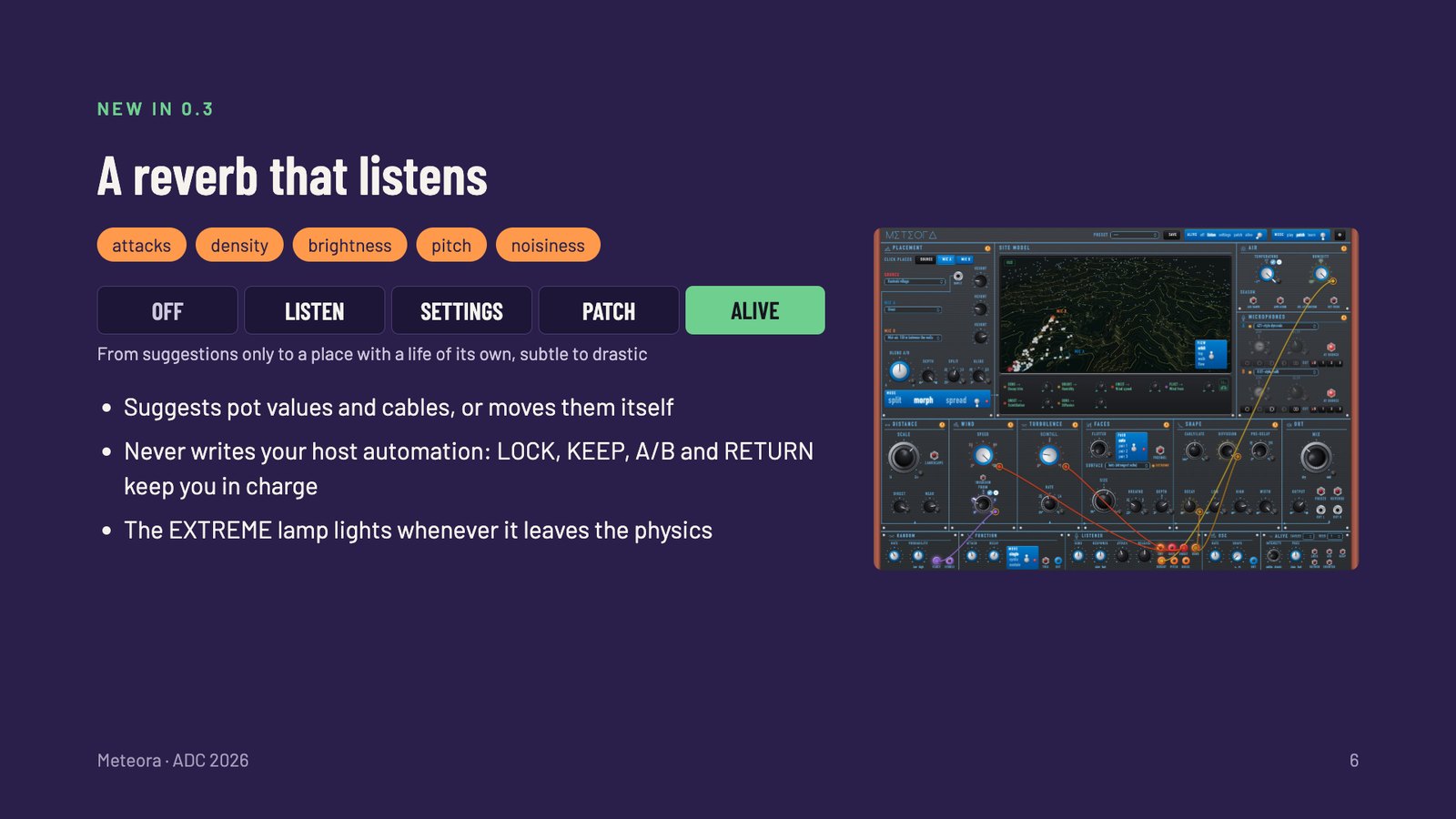
- A listener (attacks, density, brightness, pitch, noisiness) and a guide that suggests or makes changes, from subtle to drastic, for about one point of a CPU core
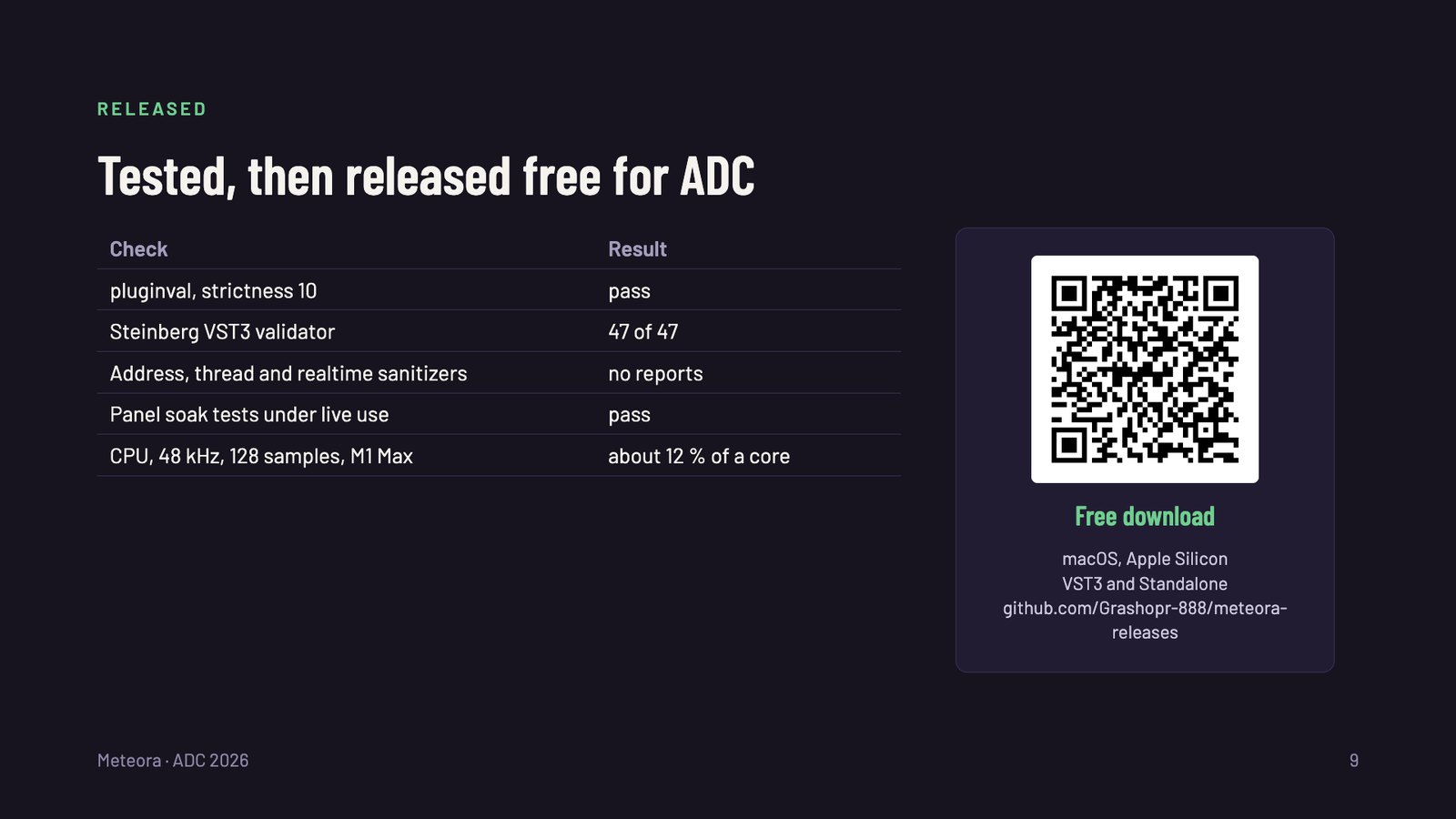
- Passes pluginval at strictness 10 and Steinberg's VST3 validator (47 of 47), with no allocations on the audio thread under address, thread and realtime sanitizers
- 41 factory presets, 106 automatable parameters and a LEARN mode that explains every control
04 · Release and exhibition
ADC 2026, then Every Thing Computer at tiat

ADC 2026 · Audio Developer Conference
Bristol, UK, and online · November 9–11, 2026
Meteora 0.3 was released as a free download for the conference and shared with attendees in Bristol by QR code.
ADC is the yearly conference of the audio software developer community, from plugins and DSP to music technology research.
Every Thing Computer · tiat, supported by Era
San Francisco, USA · October 23 to November 18, 2026
An open call exhibition of playful computing and experimental interfaces at the tiat gallery, 151 Powell St. Meteora's public premiere at new interfaces 008 is part of it.
Era is a personal computing company building the intelligence layer for new hardware; tiat is a San Francisco gallery for artworks using technology.
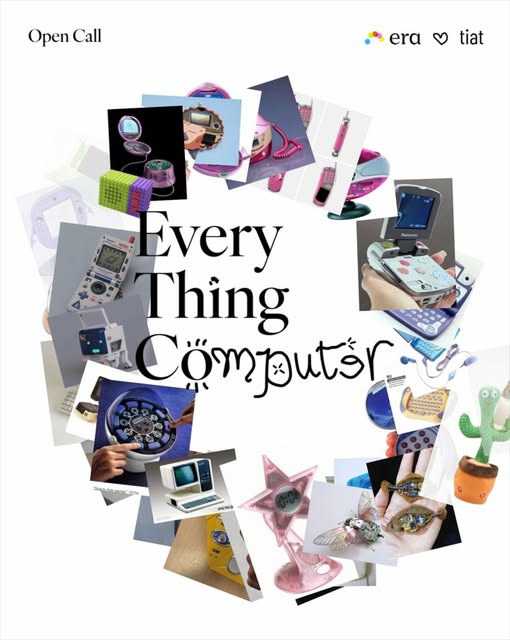
new interfaces 008 · tiat
San Francisco, USA · Sunday, November 15, 2026, 2–5 pm
Meteora's public premiere: a live demo at new interfaces, an afternoon celebrating experiments in creative technology, presented by tiat at 151 Powell St during Every Thing Computer.
tiat, the intersection of art & technology, is a home for creative technology in San Francisco; this is the first San Francisco edition of new interfaces.

05 · At ADC
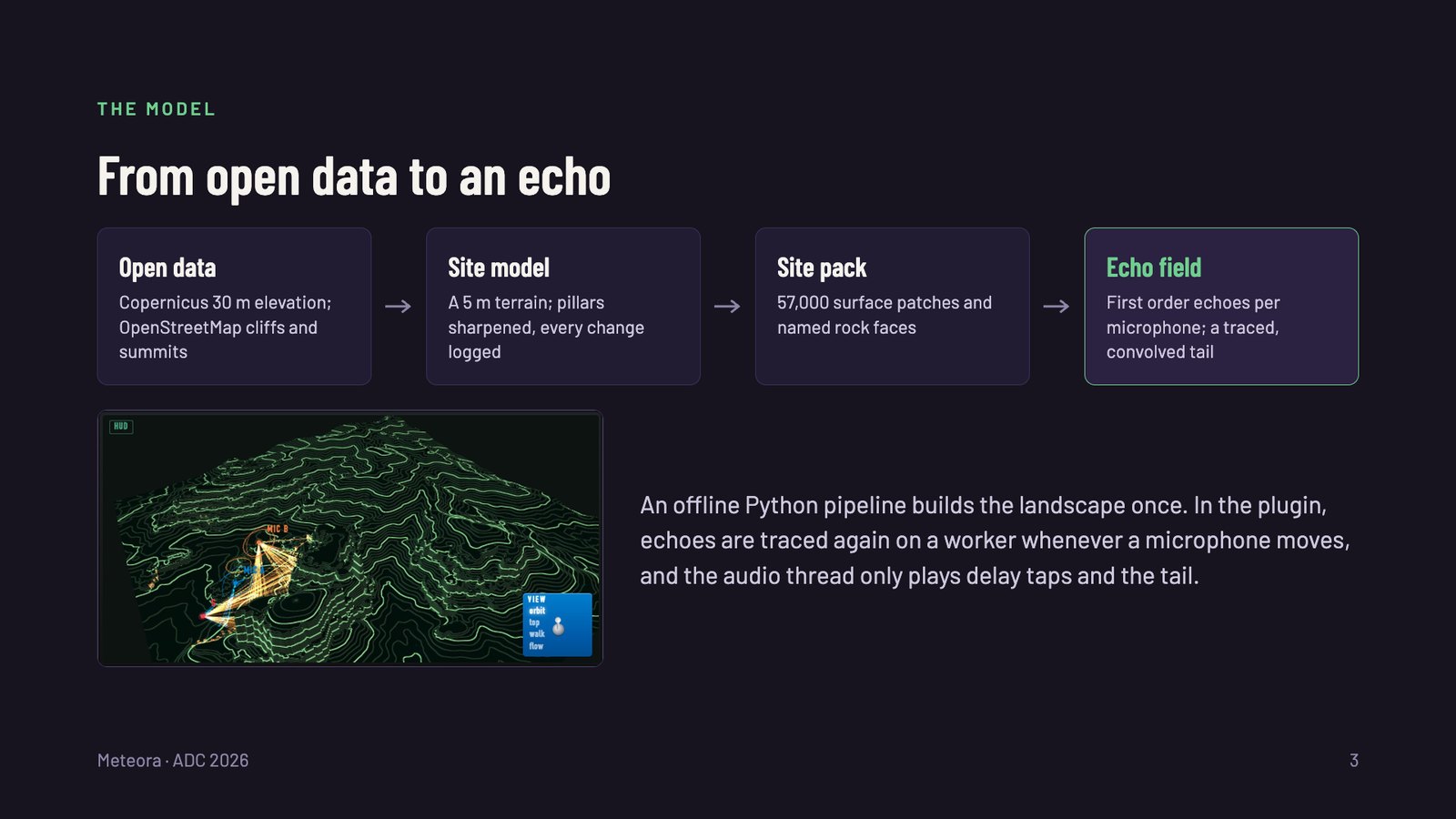
The ADC 2026 slides
06 · Architecture
How it fits together
07 · Research to production
From open data to a plugin
- 1 Data Open terrain Copernicus elevation and OpenStreetMap
- 2 Model Sharpened pillars every stylized change logged
- 3 Research Python reference echo field and reference renders
- 4 Port C++ and JUCE parity tests against the Python
- 5 Harden Validation pluginval 10, sanitizers, panel soak
- 6 Release ADC 2026 free download, macOS
08 · On screen
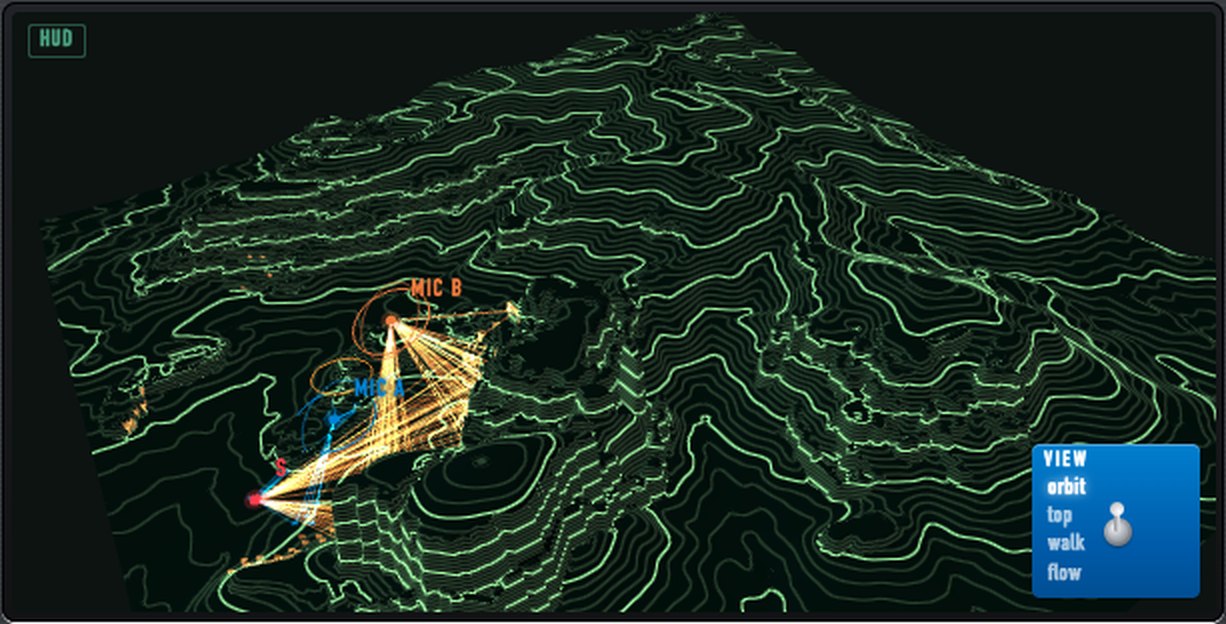
The landscape, and what it sends back
Every control shows its effect on the sound as it moves.

09 · The storyHow it came together
Why a landscape
Most reverbs give you a room. Meteora gives you a valley: conglomerate pillars rising hundreds of meters, monasteries on their summits, a village at their foot. Sound travels far there and comes back late, from many directions, and the air between decides how bright it returns. The plugin lets you place a source and two microphones anywhere in that landscape and hear it answer.
From open data to an echo
The terrain comes from Copernicus satellite elevation at 30 m, too coarse for the pillars’ walls, so they are sharpened using OpenStreetMap cliff lines and summit heights, and every change is logged. An offline Python pipeline turns that into a 5 m terrain, about 57,000 acoustic surface patches and a pack the plugin loads. In the plugin, first order echoes are computed for each microphone’s exact position, later reflections are traced on a worker and become a convolution tail, and the audio thread only plays delay taps and that tail. Every sound carries the tag “simulated from open data, uncalibrated”.
A reverb that listens
Version 0.3 adds a listener that hears attacks, density, brightness, pitch and noisiness, and a guide that turns them into suggestions or changes: dense playing can bring the place close, bright playing can change the air. It never writes host automation, and whenever it moves the landscape beyond the physics, an EXTREME lamp says so.
Released for ADC
Meteora 0.3 was released on November 6, 2026 as a free download for the Audio Developer Conference in Bristol, shared with attendees by QR code. Notarization, an AU for Logic and a Windows build are the road to 1.0.
10 · RoadmapNow, next, later
Public premiere at tiat
A live demo of Meteora 0.3 at new interfaces 008, an afternoon of experiments in creative technology at tiat, San Francisco: its first public showing, part of Every Thing Computer, the open call exhibition supported by Era.
Demo video
A short video of the landscape answering a guitar, for the README and this page.
Meteora 1.0 for musicians
A notarized installer with no Terminal step, an AU for Logic, one stable plugin identity and a simpler first screen.
Windows and CLAP
The same plugin for Windows (VST3) and in the CLAP format.
Free release for ADC 2026
Meteora 0.3 on a GitHub release page, with install steps, a checksum and a QR code for the conference.
11 · TimelineWhat happened, in order
-
Release Meteora 0.3.0, the first public release
The first version anyone outside the project can play: free, for macOS on Apple Silicon, as VST3 and Standalone, released for ADC 2026.
Customer value. A reverb that places your sound in a real landscape, with two microphones you move through it, weather as a tone control, and a guide that can listen and answer.
- The landscape reverb with two placeable microphones and modeled polar patterns
- The listener and the ALIVE guide (LISTEN, SETTINGS, PATCH, ALIVE)
- 41 factory presets and a LEARN mode for every control
- A robustness round under live manipulation, with panel soak tests and sanitizers
- A GitHub release page with install steps, a checksum, and data and license notices
Risks
- Not notarized, so users clear the quarantine flag once
- Apple Silicon and VST3 only; no AU for Logic yet
- The guide's answers are first guesses, not yet tuned by ear on many players
- Milestone Free release for ADC 2026
12 · DecisionsDecision records
Accepted Release as free, closed source software, at no cost
Context. Meteora is ready to share at ADC 2026, four days away. Its landscape is a UNESCO World Heritage Site and a living monastic community, where commercial use of the place raises a consent question. The release should cost nothing and keep options open for later.
Decision. Release Meteora 0.3 as free, closed source software under the JUCE Starter license, hosted on a public GitHub repository that holds only the release, its README and its notices.
Why. It costs nothing and takes no money from anyone, which keeps clear of the consent question, and it leaves the license of later versions open.
Consequences. The install needs one Terminal line until notarization in 1.0. The terrain data derived from OpenStreetMap stays open under the ODbL inside the plugin, and the notices say so.
13 · KeywordsTopics, methods and venues
- reverb
- geometric acoustics
- ray tracing
- impulse response
- outdoor acoustics
- ISO 9613-1
- open data
- Copernicus DEM
- OpenStreetMap
- JUCE
- VST3
- audio plugin
- audio descriptors
- Meteora, Greece
- ADC 2026
- Audio Developer Conference